
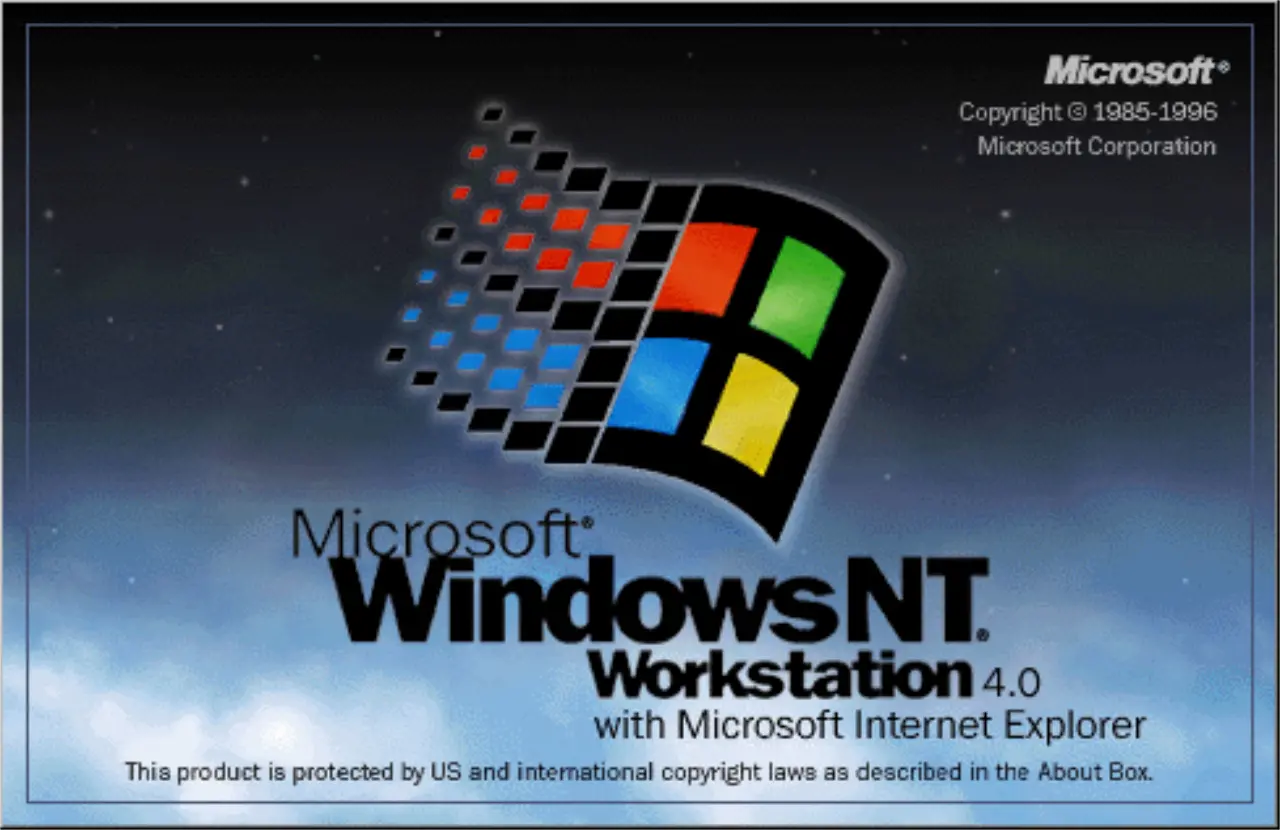
August 24 is one of the most significant dates for Microsoft’s releases. On this day in 2001,Microsoft released Windows XPto manufacturing, while five years earlier, on August 24, 1996, Windows NT 4.0 became generally available. Windows 95 was also launched on the same date one year earlier, in 1995.
The release of Windows NT 4.0 was sort of a milestone for Microsoft, because it combined the features of the NT line with an interface that looked much more familiar to regular Windows users.
The biggest visual change came directly from Windows 95. Previous versions of Windows NT still looked more like Windows 3.x, but NT 4.0 adopted the Start button, taskbar, shortcuts, My Computer, Network Neighborhood, and Windows Explorer. All these new components looked similar to the same features on its consumer-focused counterpart.
The introduction of this operating system meant that Microsoft still had two separate Windows families, but they no longer looked dramatically different on the surface. For about a year, between the releases of Windows 95 and Windows NT 4.0, Microsoft was shipping Windows 95 with its newer interface alongside Windows NT 3.51, which still used the older Program Manager-style design.
Of course, the two operating systems looked similar on the surface, but underneath they were built on very different foundations. Microsoft’s idea was to bring the ease of use of Windows 95 to the more robust NT architecture, without giving up the security and networking features that made the NT line attractive to businesses in the first place.
NT 4.0 also leaned heavily into business networking. The Server edition included Internet Information Server for hosting websites and intranets, while Microsoft added support for technologies such as PPTP, which allowed companies to set up virtual private network connections for remote access.
Windows NT 4.0 wasn’t without its problems, though. Separately from the Windows 95-style UI, Microsoft also moved much of the graphics subsystem, including the window manager and GDI, from user mode into kernel mode. That improved performance, but it also meant a bad graphics driver or graphics-related failure had a better chance of crashing the entire operating system. Also, driver availability was more limited, Plug and Play support was limited, and Windows NT 4.0 never received official USB support.
The Windows NT line is still alive and well today, even if Microsoft no longer uses the NT name in its branding. Windows 2000, XP, and every modern version that followed belong to the same NT family, including Windows 11. So while NT 4.0 is practically a relic today, its lineage is still powering Windows PCs.