
The end of August is the period for looking back at Microsoft’s timeline. Yesterday, we celebrated the 25th and 30th anniversaries ofWindows XPandWindows NT 4.0, and today we’ve got a story about another Microsoft product from that era, Windows 95. The story is told by Microsoft veteran Raymond Chen, who recollected how the company had to change the anti-piracy hologram on Windows 95 boxes after complaints from a government.
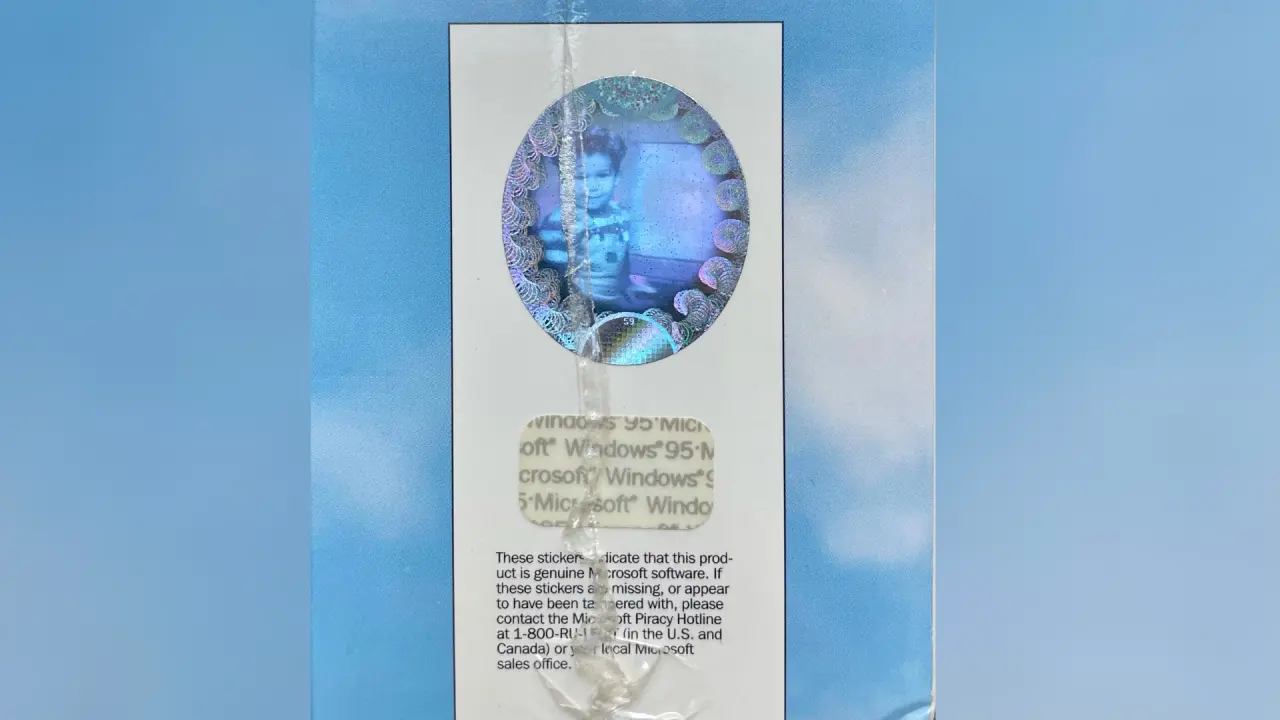
Back when software was distributed on discs, Windows 95 had a hologram attached to the side of its package to prevent piracy. Unlike a regular printed image, a hologram changes depending on the angle you look at it from, which makes it much harder to reproduce convincingly with ordinary printing equipment. According to Chen, the photographer chose his own infant son as the model because the human face is particularly difficult to copy accurately.
The original hologram was also animated. It showed the baby sitting next to a computer, and as the box was tilted, his head turned towards the monitor.
The problem started when one government, which Chenstill hasn’t identified, complained that Windows 95 packaging depicted naked children. The baby wasn’t wearing a shirt, and because the hologram only showed him from the waist up, officials apparently assumed he wasn’t wearing pants either.
Microsoft then had to scramble to produce a replacement hologram. In the new version, the baby was wearing a shirt and overalls, but because the change was made in a hurry, Microsoft didn’t have enough time to recreate the original arm animation. As a result, the replacement lost one of the more interesting parts of the original design.
The original topless-baby hologram is much harder to find today than the replacement. Chen says that if you still have a Windows 95 box with that original version, you have a genuine collector’s item. Of course, how you perceive the topless child on the hologram is entirely up to you.