
Microsoft had quite a bit of momentum in the early days of mobile software, before Android and Apple dominated the scene. Most – if not all – of its competitors in the day have all but disappeared –Palm(after multiple takeovers ended up as part of HP),RIM BlackBerry(now a software company),Symbian(born out of PSION, a cross-party effort to build a mobile OS).
Since the late 1990s, Windows CE was built as a highly modular operating system that could run on multiple hardware architectures and could be heavily customized by OEMs building very different types of hardware. The first handhelds built with CE were like miniature laptops, flip-top devices with a screen showing a familiar-looking Windows environment, Start menu and all.
Examples of what CE (or WinCE if you like to poke fun at it) was used for varied from in-car stuff like the1998 AutoPC, to theSega Dreamcast console, all the way up to headless embedded control systems and software running on mobile phones.
The original promise with CE was really to appeal to the huge number of Windows developers, who could use the same Visual Studio dev tools and similar APIs to write software for both a PC and a mobile device.
In the early 2000s, most people would get their mobile phone from the network they chose, and it was often subsidized and controlled by that network. Microsoft had to deal with a minefield of complexity when it came to releasing CE-based mobile devices that would be supported by different networks all over the world, with devices produced by a small number of OEMs like HTC, being branded and customized by a variety of networks who got to control how the software on their phone behaved. They also had to sign off updates, meaning if you were unlucky, you could have a device that the carrier had stopped supporting, even if the software could have been updated to later versions if they had allowed.
Microsoft dallied with writing software for other phones previously – like the short-lived effort to put Internet Explorer on Sony phones in 2000…
… but the real efforts went into writing a whole new phone OS.
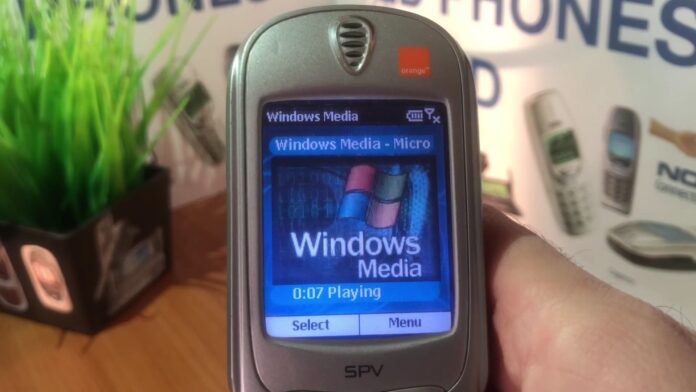
Five years before Apple unveiled the iPhone, Microsoft and the French/UK comms network Orange launched the “Orange SPV” – a new device running Smartphone 2002 software (on Windows CE). In many ways it was really ahead of the rest of the industry, especially when it came to integrating with email, calendar and contacts as provided by Microsoft’s Exchange Server that was becoming the default business email system.
Take a trip down memory lane withsome details of the SPV device (an HTC “Canary”, running “Stinger” software) and theoptimism of the launch event. They loved codenames then… Stinger was, in the military sense, a surface-to-air missile particularly aimed to taking down planes – so was effective against pilots (remember the PalmPilot?).